
An interview with H.E. Vasyl Bodnar, Ambassador of Ukraine to Poland, on the occasion of the 4th anniversary of the full-scale war.
It has been four years since Russia launched its full-scale invasion of Ukraine. From the embassy’s perspective, how would you assess today the extent of the support Ukraine has received from Poland – both during the first, dramatic days of the war and in the years that followed?
First, I would like to sincerely thank you for the opportunity to give this interview and to thank Poland for all the support it has shown Ukraine from the start of the war until today. Opening doors and hearts to millions of Ukrainians seeking refuge from the Russian war saved many lives and gave them the chance to start a new chapter – whether in Poland or in other countries. Today, they are repaying that kindness by working and contributing to the economic development of the countries where they live, including Poland. According to Deloitte’s calculations in a study conducted in collaboration with the Office of the UN High Commissioner for Refugees (UNHCR), the added value of the presence of refugees from Ukraine to the Polish economy is equivalent to 2.7% of GDP, or roughly 85 billion zlotys, not including taxes or health and social security contributions.
Currently, nearly two million Ukrainian citizens reside in Poland. About one million arrived before Russia’s full-scale invasion and have largely integrated into Polish society. The other million are war refugees, most of whom are registered in the UKR-PESEL system. According to data from NGOs and government institutions, over 70% of them are employed, supporting the economy.
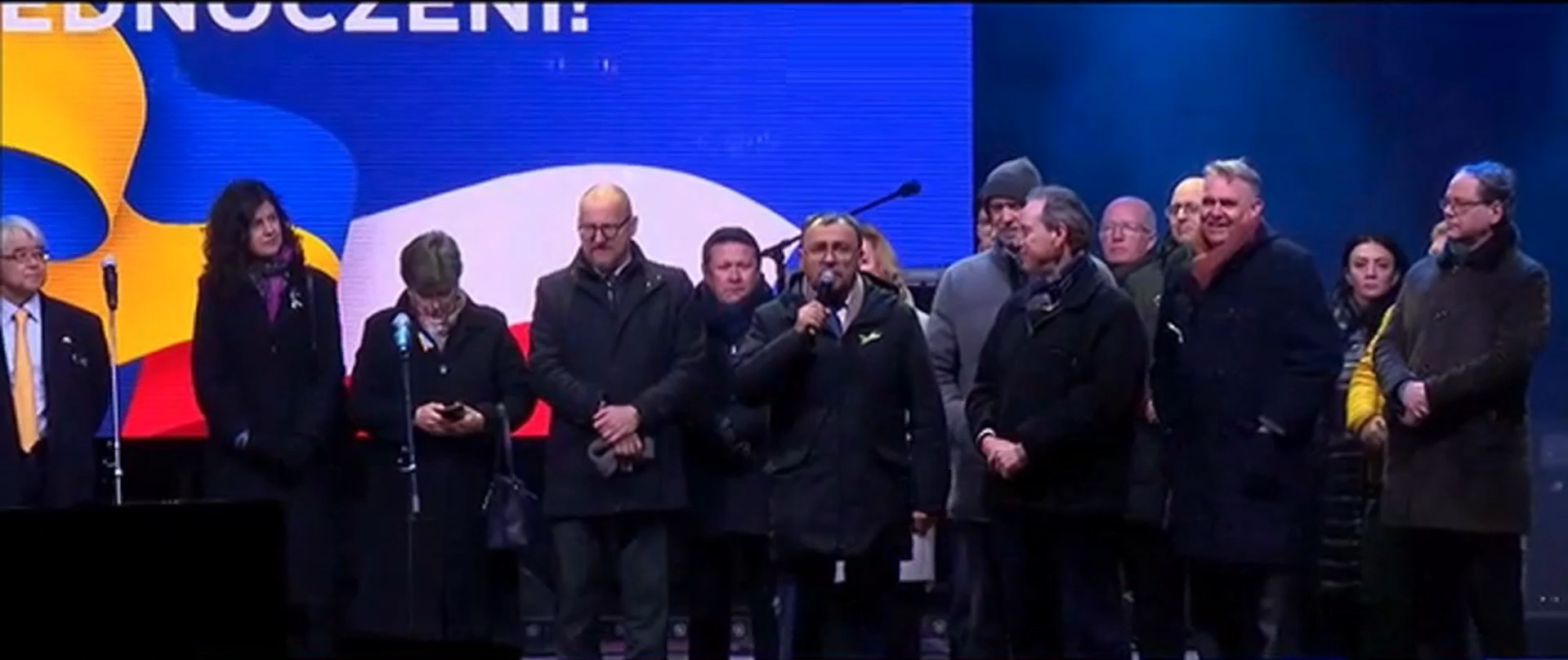
The third aspect of this support is the recent mobilisation of the Polish public. This occurred at a time when Russia was attempting to turn the harsh winter into a weapon of war – deliberately attacking Ukraine’s energy infrastructure, including power plants, combined heat and power plants, and transmission networks, to deprive city residents of electricity, heat, and water during severe cold snaps when temperatures dropped below -25°C. It was precisely under these difficult conditions that an initiative by foundations, civil society organisations, and opinion leaders emerged under the name “Warmth from Poland to Kyiv”. This was followed by further campaigns; funds were also collected in churches, and ordinary Poles donated their generators. For Ukrainians, this was incredibly important – not just for the ability to stay warm thanks to the donated generators and heating devices, but also for the sense of solidarity and support it conveyed. It was a true expression of empathy from the Polish people, demonstrating how society can mobilise in response to human tragedy..
Could you share some specific examples of grassroots initiatives in Poland that have particularly stood out to Ukrainian diplomats in recent months?
One of the most important was, of course, the aforementioned social initiative by Polish foundations, which organised a collection as part of the “Warmth from Poland to Kyiv” campaign. We are extremely grateful for it. Representatives of these organisations later came to Kyiv and met with government officials there. It was a very important gesture of solidarity and tangible assistance. Other examples include initiatives carried out with the support of the government and public organisations, involving the delivery of various types of equipment and supplies needed by Ukraine. This also demonstrates the scale of commitment from Polish society and institutions.
What is especially moving is how this aid extended even to churches. In parishes throughout Poland, collections were organised during Masses, with the proceeds directed towards supporting Ukraine. The sheer scale of this assistance was remarkable and, in numerous instances, matched that of major nationwide campaigns.
These endeavours also inspired other nations. I won’t deny that Ukrainian diplomats highlighted them abroad, stressing how Poland was once more leading by example in global solidarity. In essence, we helped propel this vast social movement, enabling Ukraine to endure that winter’s harshest phase. We urged other countries: “Look to Poland, emulate her lead, and aid as generously as possible.” Poland has illustrated the extraordinary power of civil society – even amid prolonged war and political frictions – when human life holds paramount value.
I still recall my student days, arriving in Poland in 1997 just after the great flood. That was when I first witnessed Poles’ remarkable ability to rally and deliver grassroots aid to the afflicted. For us – a post-Soviet society reliant on top-down directives and unfamiliar with such bottom-up efforts – it proved transformative. Largely, it was from Poles that we absorbed this liberty of mind and initiative. That liberty later echoed in our own upheavals—from the Orange Revolution and the Revolution of Dignity to the civic surge defending our homeland against Russian aggression.
This underscores Ukraine’s place within the European family, where grassroots civic action is vital. Poland stands as a frontrunner here, exemplifying empathetic, open, and united conduct. No wonder “solidarity” evokes Poland – and today, it manifests through tangible deeds and campaigns.
Poland has been providing military and political support to Ukraine since the beginning of the war. How do you assess today, after four years, the role of the Polish government in building an international coalition to support Ukraine?
Right from the war’s outset, Poland exhibited true leadership in forging global backing for Ukraine. This shone through in the conflict’s early months – from supplying the initial tanks that aided Kyiv’s defence and frontline stabilisation, to forming wider international coalitions. Poland co-founded the so-called “tank coalition” alongside numerous other military partnerships.
Logistics infrastructure played a pivotal role too. Poland emerged as the primary hub channelling military and humanitarian aid to Ukraine. This facilitated swift, efficient deliveries of gear, munitions, and vital supplies. Today, Poland stays a key player in global efforts, including the “coalition of the willing” – nations committed to sustaining Ukraine’s support and debating long-term security assurances.
Today’s geopolitical landscape, with global focus shifting to the Middle East, reveals security’s truly worldwide stakes. Consider Iran’s notable involvement, furnishing Russia with tech, kit, and drones deployed against Ukraine. These drones now threaten civilians and energy grids most acutely. Strikes on urban areas, power stations, and civilian sites reveal evolving modern warfare.
It bears emphasising that Ukraine fights for the aggressor’s withdrawal, restoring enduring peace and security to our sovereign land – not perpetual conflict. Peace is our objective: compelling the aggressor to genuine talks and war’s end. No nation craves peace more than Ukraine, yet it cannot entail appeasing invasion. History warns that yielding to aggressors invites escalation. On 11 March this year marked one year since the Jeddah accords (Saudi Arabia), where Ukraine and the US offered Russia a complete ceasefire. Russia has rejected every peace-advancing step. Hence, sustained pressure on Russia is crucial – via military aid stabilising Ukraine’s lines, sanctions, and curbing its war-funding capacity.
Numerous nations pour vast resources into missile defence like Patriot, vital against ballistic threats. Meanwhile, the world is just starting to master defences against swarm drone assaults.
Yet, ironically, Ukraine’s expertise countering contemporary threats offers unparalleled lessons for others. We stand ready to impart it. President Volodymyr Zelenskyy has declared openness to partnerships, sharing know-how as security unites us all.
Here, Poland’s contribution stays vital – not just steadfastly backing Ukraine, but sustaining worldwide focus on Russia’s war, linking European safety to global equilibrium.
In the face of the prolonged war, have the priorities in cooperation with the Polish government changed – and if so, in which areas the most?
Ukraine-Poland ties evolve dynamically and across multiple fronts, rooted in mutual interests and principles. A hallmark is the deepening governmental dialogue, nurturing a constructive bilateral climate.
A landmark was President Volodymyr Zelenskyy’s Warsaw visit on 19 December last year. Equally fruitful were discussions with President Karol Nawrocki and Prime Minister Donald Tusk. Sejm and Senate engagements at diverse levels proved equally significant. Prime Minister Donald Tusk’s 5 February Kyiv trip this year advanced this further. There, a pivotal document was inked, unlocking defence-sector prospects.
Equally noteworthy was the fourth-anniversary visit to Kyiv by Sejm Speaker Włodzimierz Czarzasty and Deputy PM/Foreign Minister Radosław Sikorski amid Russia’s full-scale assault. These summits built impetus for sustained talks between Minister Sybiha and Deputy PM Sikorski, tasked with bilateral and global ties. They enable tackling pressing matters with domestic resonance for both – spanning agriculture, metallurgy, and beyond.
Tailored, harmonious cooperation formats adeptly tackle challenges. Consider border blockades: rife in 2023 and into 2024, they’ve dwindled markedly in 2025. Not from absent issues, but direct dialogue supplanting media sparring. Governments back ministries, farmers, and producers in platforms for real-time info-sharing and issue resolution. Truly, joint advancement beckons in realms vital to Polish and Ukrainian communities alike.
Of course, tensions sometimes arise around individual statements or decisions, which may lead to unexpected and undesirable effects. However, in my view, by 2025 a more structured and stable dialogue will already have been established. We have reached a stage at which we are jointly organising events and initiatives that could, in the future, pave the way for major joint projects – similar to those implemented during Euro 2012.
Are there ongoing discussions regarding the involvement of Polish companies and state institutions in the post-war reconstruction of Ukraine, and what are their prospects?
A few years ago, the President of Ukraine, Volodymyr Zelensky, stated that those who come first to help will be the first to take part in rebuilding Ukraine. Poland holds a special position in this regard, as it was one of the first countries to provide Ukraine with multidimensional support and has strong potential to participate in projects related to Ukraine’s future reconstruction. This stems not only from political decisions, but also from geography, the shared border, close ties between our societies, and Poles’ strong understanding of Ukrainian realities.
In practice, such efforts have already begun. In recent years, several visits by Polish delegations to Ukraine have taken place. One of the largest occurred in June 2025 – a sizeable delegation of representatives from business, public administration, and parliament, accompanied by the Minister of Economic Development and the government plenipotentiary for cooperation with Ukraine, Paweł Kowal. Even at that stage, discussions focused on several key areas of cooperation that are particularly attractive for Polish companies. These include infrastructure, logistics, energy, the development of border regions, as well as solutions related to security and national defence.
An important step was also the signing – last October – of an agreement concerning the operations of Bank Gospodarstwa Krajowego in Ukraine, which was subsequently ratified in March by the Verkhovna Rada of Ukraine. This institution is intended to support Polish companies in conducting business activities in Ukraine and participating in reconstruction projects, including through financing, guarantees, and other support instruments. Other institutions are also involved in this process, such as the Polish Investment and Trade Agency. According to its leadership, around 3,500 Polish companies have expressed interest in participating in projects related to Ukraine’s reconstruction.
We are also currently preparing for an important international event – the Ukraine Recovery Conference 2025, which will take place on 25–26 June in Gdańsk. A large number of Polish enterprises and institutions will participate, gaining the opportunity to establish business contacts and begin direct cooperation with Ukrainian partners.
Cooperation is developing not only at governmental level, but also at regional and local levels. Polish and Ukrainian regions and partner cities are engaged in direct dialogue and are preparing joint development projects. Recently, a delegation from the Lower Silesia region visited the city of Dnipro, where discussions focused on opportunities for economic and investment cooperation. There is a growing number of such examples. Similar discussions also take place during international local government meetings, such as conferences in Mikołajki, where representatives of local authorities from both countries discuss concrete projects – ranging from small local investments to grant programmes for businesses.
Of course, it must be remembered that the full-scale reconstruction of Ukraine will only be possible once the war has ended. Security conditions remain difficult. However, life in Ukraine continues, and many investments are already being implemented. Some companies continue to operate on the ground despite the risks – there have even been cases where company facilities have been damaged as a result of Russian attacks.
That is why we are already preparing cooperation structures that can be fully utilised once the war is over. Poland has a unique role in this process – not only as Ukraine’s bilateral partner, but also as a potential logistical and business hub for companies from other European and non-European countries wishing to participate in Ukraine’s reconstruction. It can become an important centre for coordinating and supporting international reconstruction projects, helping companies from various countries to enter the Ukrainian market and carry out joint ventures.
What message would you like to convey today to the people of Poland – both to representatives of the authorities and to ordinary citizens – in the context of the fourth anniversary of the war and the ongoing solidarity with Ukraine?
First and foremost, I would like to express my sincere gratitude. Poland was, is, and – hopefully – will continue to be our key partner. I would also like to extend my warmest thanks to Polish society. The level of mobilisation and solidarity that Poles have shown, and continue to show, towards Ukraine is truly exceptional. I believe the world has rarely witnessed such a scale of support. It is precisely this dimension of humanity and social solidarity – capable of transcending political differences, competing interests, and divisions between social groups – that demonstrates that, in the face of human tragedy, empathy, responsibility for others, and the willingness to act together matter most. Both in our country and in Poland, everyone has their own views and interests, yet Poland’s attitude towards Ukraine has shown that, at crucial moments, it is possible to rise above all divisions. It has also demonstrated how important not only support is, but also cooperation.
Today, we have a unique opportunity that we must not waste. Perhaps for the first time in history, thanks to our cooperation, we have been able to influence the main course of geopolitical developments in Europe. For years, others made decisions and imposed conditions. Today, we can help shape this reality. Ukraine has halted the aggression, and Poland has played a significant role in helping us to do so. Together, our voice is stronger – physically, morally, and politically. Therefore, let us continue to act. Together. This also applies to Ukraine’s integration with the European Union and NATO. It is in our national interest, but at the same time it is also in the interest of Poland and the entire region. Let this be a fitting conclusion to our conversation and today’s meeting.
Thank you very much for the interview.
Ada Krzewicka