

In an age of constant haste, overwhelming noise and the relentless barrage of information coming at us from every direction, we increasingly feel the need to escape the pressures of everyday life. We long for peace and quiet which, on the one hand, are a natural human need and, on the other, have become a luxury we can afford less and less often. Yet there is a place in Poland where this luxury comes as standard. It is the Podlaskie Voivodeship, where people, nature and tradition come together to create a unique mosaic, and where slow living is a way of life. It is well worth spending at least a few days here to recharge your inner batteries and experience what a true reset feels like.
The Bug River Valley – Every Kind of Relaxation
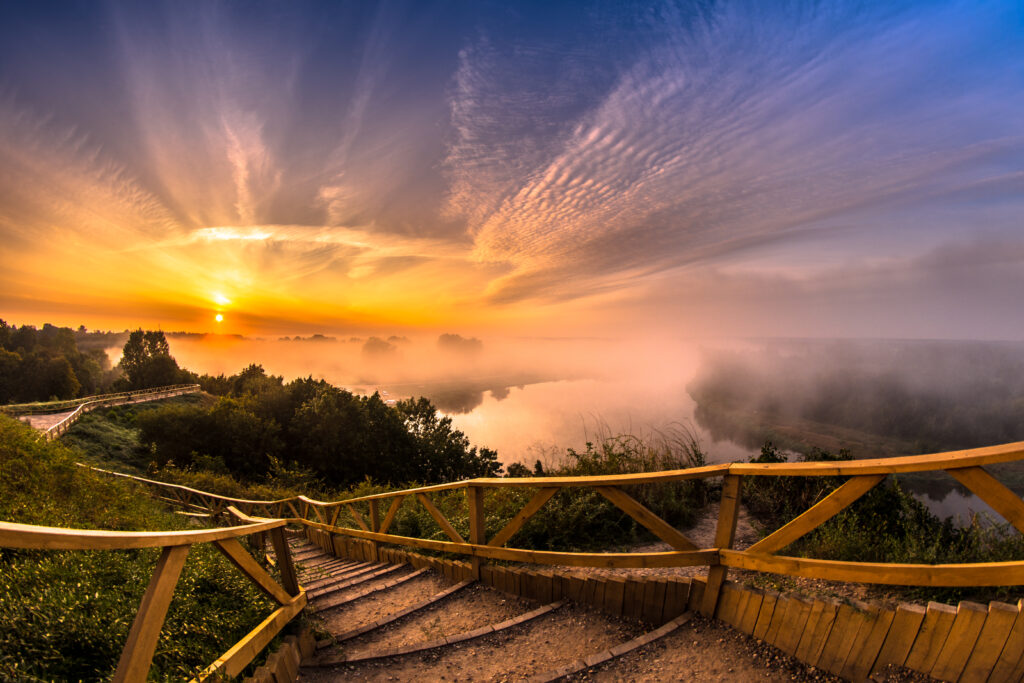
We begin our journey in the Bug Valley, stretching across the southern reaches of the region. It is a true paradise for anyone looking to disconnect from the demands of everyday life. The gently flowing Bug River is particularly conducive to relaxation. Take a kayaking trip and, in the picturesque town of Mielnik, perched on a riverside escarpment, meet some of the friendliest animals in the world – alpacas. In the company of these charming creatures, you will feel like a child again.
It is also worth visiting the local chalk mine, whose traditions date back to the 16th century and which is now the only active open-pit chalk mine in Poland. Drohiczyn is one of the oldest towns in the region and, for more than a decade, has been associated with the country’s largest kayaking event, “500 Kayaks”. If you happen to be in Drohiczyn on the first weekend of August, you can try your hand at taking part in the event (advance registration is essential, as all available kayaks are often booked several days before the event). Despite the physical effort, a high level of endorphins is guaranteed!
Beginners can first visit the Bug River Kayaking Tourism Centre and take a seat at the controls of a kayaking simulator. Fans of retro culture will undoubtedly be transported back to their youth when visiting Drohiczyn’s exhibition of vintage motorcycles.
The Zagubek Centre for the Promotion of Local Products is a place that could be described as offering memories to take home – preserved in jars of delicacies you may have sampled while exploring the region. It also showcases handicrafts, tangible evidence of the centuries-old culture of these lands, and offers visitors the chance to learn how to make zaguby (be sure to try them before you leave) or discover the secrets behind baking the traditional Mielnik korowaj.
Breathe in the Green Lungs of the Land of the European Bison
The Podlaskie Voivodeship is known as the “Green Lungs of Poland” for good reason. Here, the country’s green lungs – and perhaps those of this part of Europe – truly breathe. Four national parks and three landscape parks place Podlaskie among Poland’s leading regions in terms of protected natural areas.
The best known are the Białowieża Forest and the Białowieża National Park, which protects part of it. The gateway to the Białowieża Forest is Hajnówka, a small town that was once an important railway junction and centre of the timber industry and is now increasingly popular with tourists.
Its landmark is the Orthodox Cathedral of the Holy Trinity, a church distinguished by its remarkable architecture and fascinating interior, featuring seven altars and stained-glass windows rarely found in Orthodox churches. Every May, amateur and professional choirs from Poland and abroad come to Hajnówka to perform at the International Festival of Hajnówka Days of Orthodox Church Music, held in the cathedral.
At the Museum of Blacksmithing and Locksmithing, you can see more than 500 exhibits associated with the traditional craft of the rural blacksmith. Meanwhile, the Miniature Park of Podlaskie Monuments brings together the region’s most important landmarks in miniature, at a scale of 1:25 – including churches, palaces and manor houses. One of the highlights is a miniature of the Imperial Palace in Białowieża, which no longer exists.
Hajnówka is also the departure point for a narrow-gauge railway that takes you deep into the forest, with the woods literally within arm’s reach. It is a truly slow-paced experience, taking around three hours, but… isn’t that exactly what we have come here to experience? If you enjoy active recreation in nature, you will find Nordic walking trails winding through the paths of the Białowieża Forest.
Before leaving Hajnówka, take some local flavours with you – tsar’s cheese, Hajnówka cottage cheese and, for dessert, the exquisite marcinek cake.
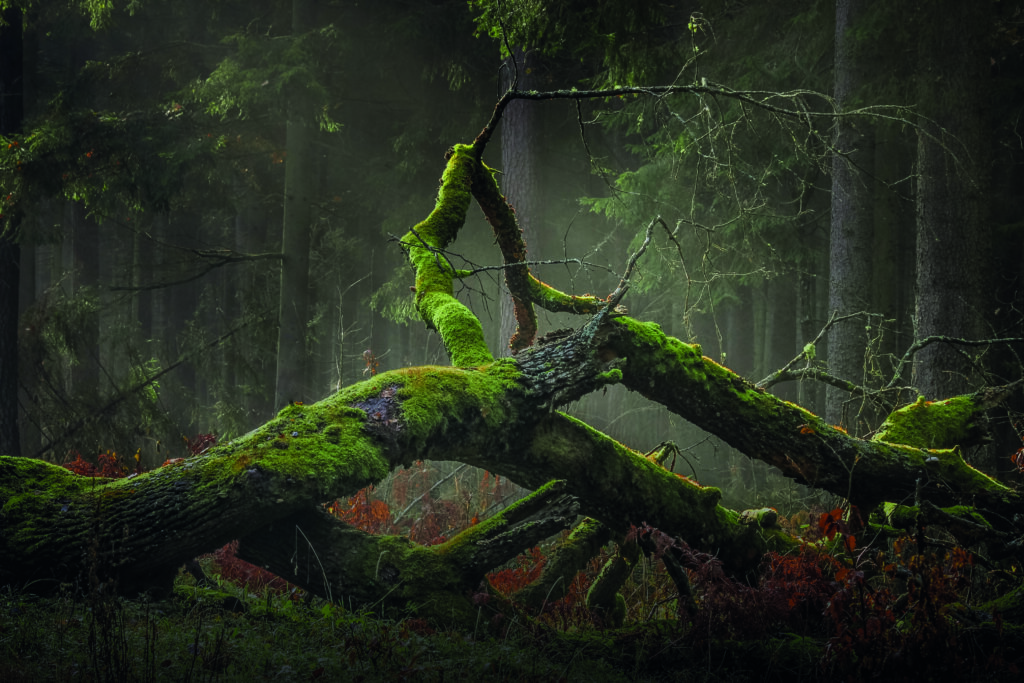
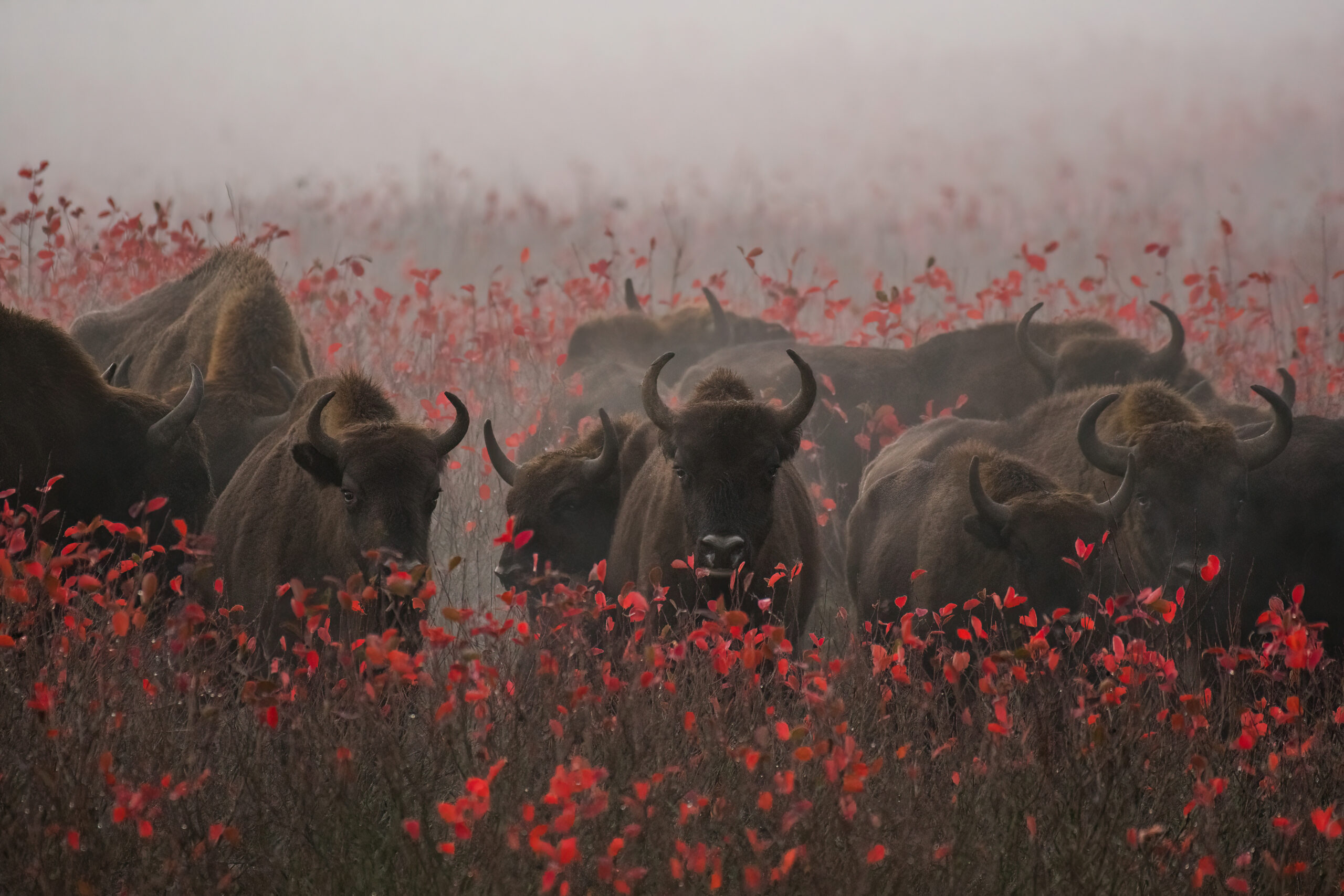
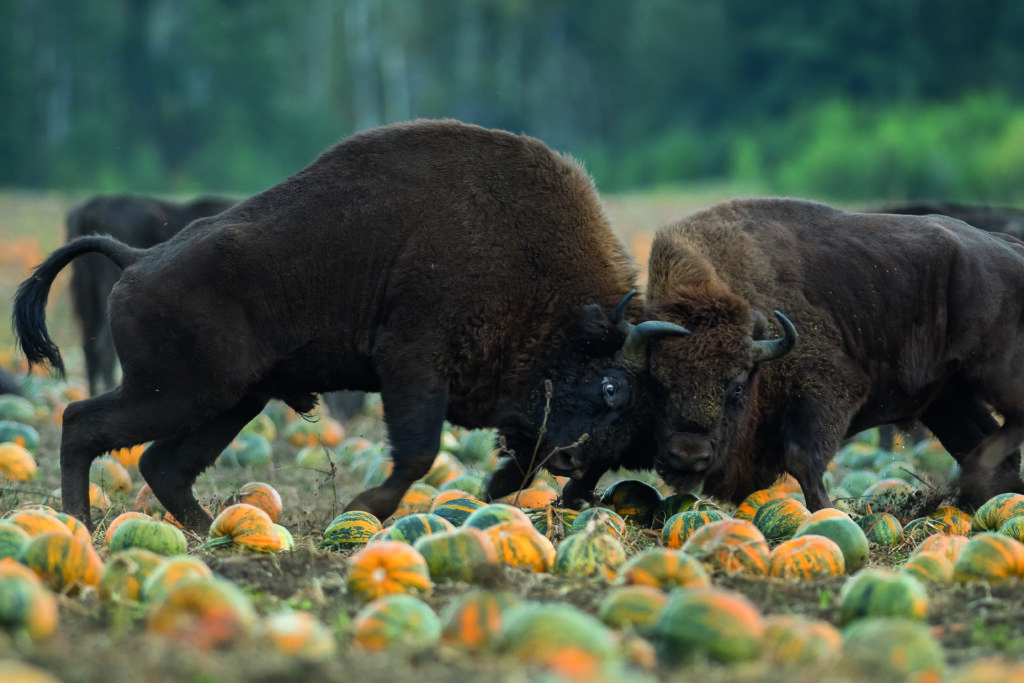
Just beyond Hajnówka, a nearly 20-kilometre-long green tunnel opens before you. This is the Białowieża Forest – the kingdom of the European bison, where nature takes centre stage, along with the forest’s undisputed king: Europe’s largest land mammal.
About 4 km before Białowieża, turn towards the European Bison Show Reserve. In summer, it is the best place to see the king of the forest, as well as other woodland inhabitants, in conditions resembling their natural environment. It is worth beginning your visit to the Reserve at the Białowieża National Park’s Educational Pavilion. This modern, multimedia educational space is an excellent place to learn about the European bison and its role in the ecosystem.
After visiting the bison, continue on to Białowieża. This small forest settlement, with a history stretching back several centuries, has hosted monarchs, diplomats and politicians from around the world. Traces of their presence can still be found in the area’s architecture, culture and cuisine.
Today, Białowieża is home to a large community of scientists. Their daily work, passion and commitment to nature conservation help ensure that we can still experience the Forest much as it was centuries ago, with all its extraordinary richness and its most famous resident – the European bison – at its heart.
The “Reserve” Protected Area is the oldest and most valuable part of the Białowieża Forest protected by Białowieża National Park. Its south-eastern section (the former Strict Reserve) is open to visitors exclusively with a guide licensed by the Białowieża National Park. Here, you can encounter plant and animal species that have long since disappeared elsewhere or are now on the brink of extinction.
The park headquarters are also home to the Grodno multimedia Museum of Nature and Forest, which presents the natural environment and history of the Białowieża Forest, as well as the centuries-old human presence in the area. It is also worth climbing the observation tower, which offers a panoramic view of Białowieża and the surrounding forest.
In Palace Park, be sure to see the Grodno Governor’s manor house, built in 1845. Its intricate woodcarving decorations give it an almost fairytale-like appearance. Also visit St Nicholas’ Orthodox Church, built of distinctive red brick and featuring a unique porcelain iconostasis.
St Teresa’s Church is notable, among other things, for the Chapel of St Hubert, whose interior features an unusual decoration made from tree trunks, roots and animal antlers.
The Trail of the Royal Oaks and Lithuanian Dukes is a forest path lined with centuries-old oak trees that have witnessed the times of Polish and Russian rulers who came here to hunt. Another unusual way to explore the area around Białowieża is by riding handcars along the former railway tracks to the old railway stations once used by dignitaries arriving in the region.
No visit to the Forest would be complete without discovering its flavours. These are largely the gifts of the woodland – mushrooms and wild berries – as well as game dishes, exquisite honey, cheeses, cured meats and bread.
You could easily spend many more days in the Białowieża Forest region, savouring the tranquillity of nature and its culinary specialities. But let us move on, because there are no less fascinating places and people waiting to be discovered.
As Guests of the Tatars
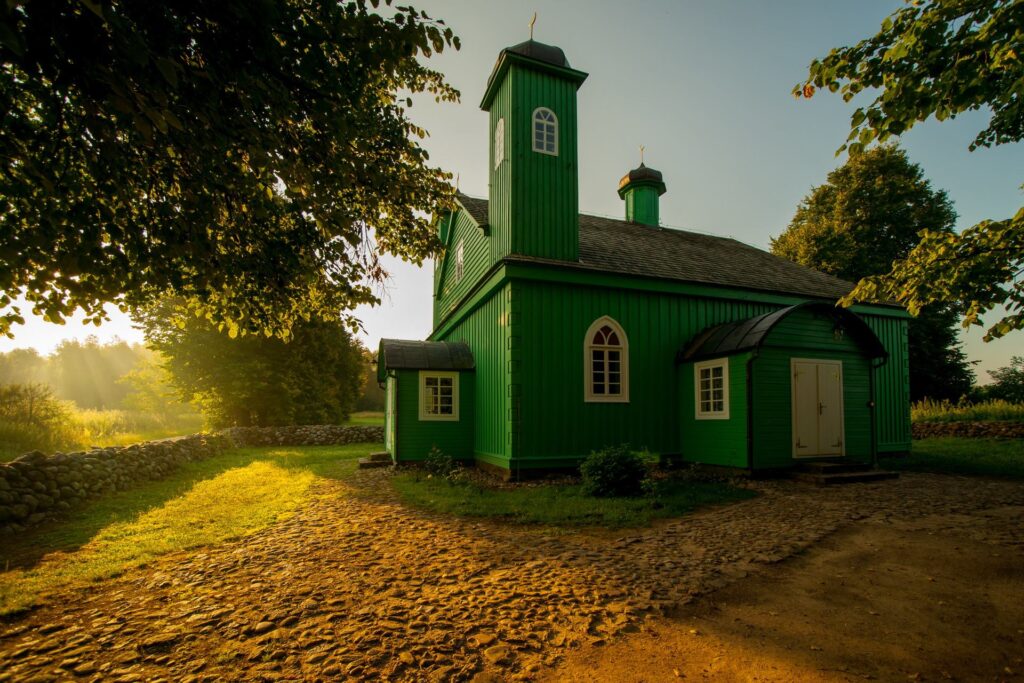
We are in Kruszyniany, one of the villages located along the so-called Tatar Trail. The Podlaskie Voivodeship is home to the largest concentration of Tatars in Poland, and the 17th-century mosque in Kruszyniany is one of the oldest in the country. Listen to your guide’s stories about the history and present-day life of the Tatars of Podlaskie and take a moment for quiet reflection at the nearby mizar (cemetery).
If you stay at Tatarska Jurta, you will have the opportunity not only to step inside a genuine yurt and spend the night there, as the Tatars of old once did, but also to sample some true culinary delicacies. The signature pierekaczewnik, kołduny, chebureki or pieremiacze – whatever you find on your plate, you are sure to enjoy it! The remarkable thing about this cuisine is that, despite the blissful feeling you experience after a meal, you will not feel the slightest bit weighed down. Instead, you will have the energy and enthusiasm to continue discovering the beauty of this extraordinary region.
And that beauty can be seen at every turn, including along the winding road from Kruszyniany to Krynki, which snakes through hills and forests. From Krynki, we take the more direct route to Augustów.
Augustów – A City Always Riding a Good Wave
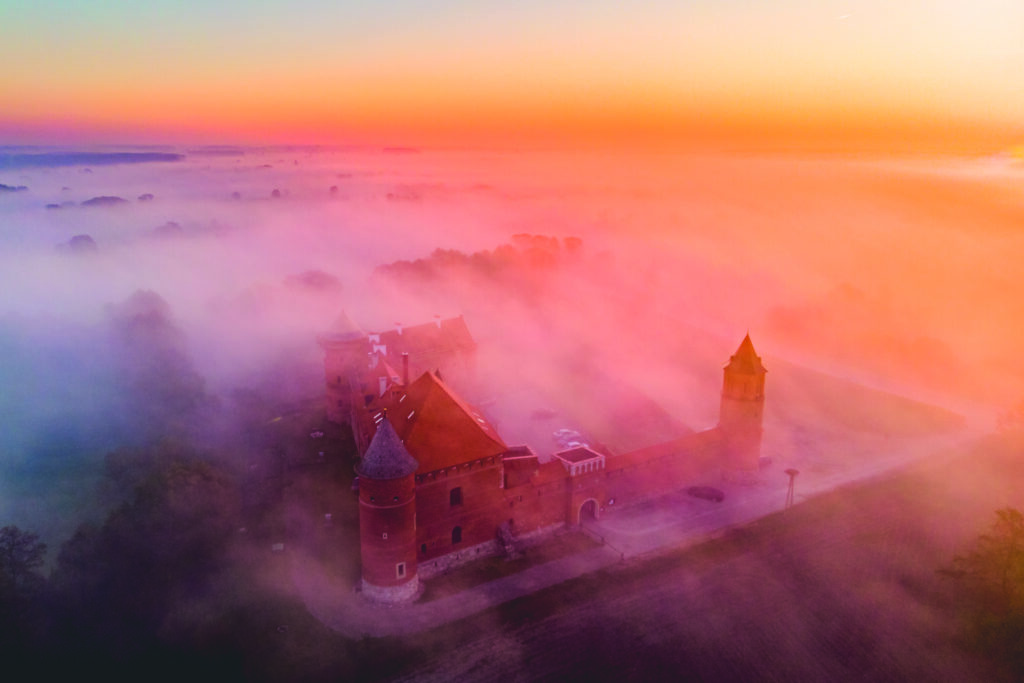
Fans of active leisure and water sports need no special introduction to Augustów. It is undoubtedly the summer capital of the region. But Augustów will certainly not disappoint those looking for less strenuous forms of relaxation either. The natural surroundings are ideal for unwinding, with numerous lakes, rivers and the Augustów Canal. Completing the picture are the resin-scented forests of the Augustów Forest, one of the reasons why the town was granted spa status.
The best way to begin your visit to Augustów is with a stroll along the riverside boulevards. If you happen to be here at the end of July, do not be surprised to see a parade of the strangest watercraft imaginable on the Netta River, taking part in the Polish Championships in Swimming on Anything. With a history spanning almost 30 years, this event has made the town famous far beyond its borders.
Thrill-seekers can get their adrenaline rush at the water-ski lift, while cycling enthusiasts can explore one of the many well-known bicycle routes. These include the Podlaskie Stork Trail, the Green Velo Eastern Cycling Trail and even the international EuroVelo cycling route – EV11.
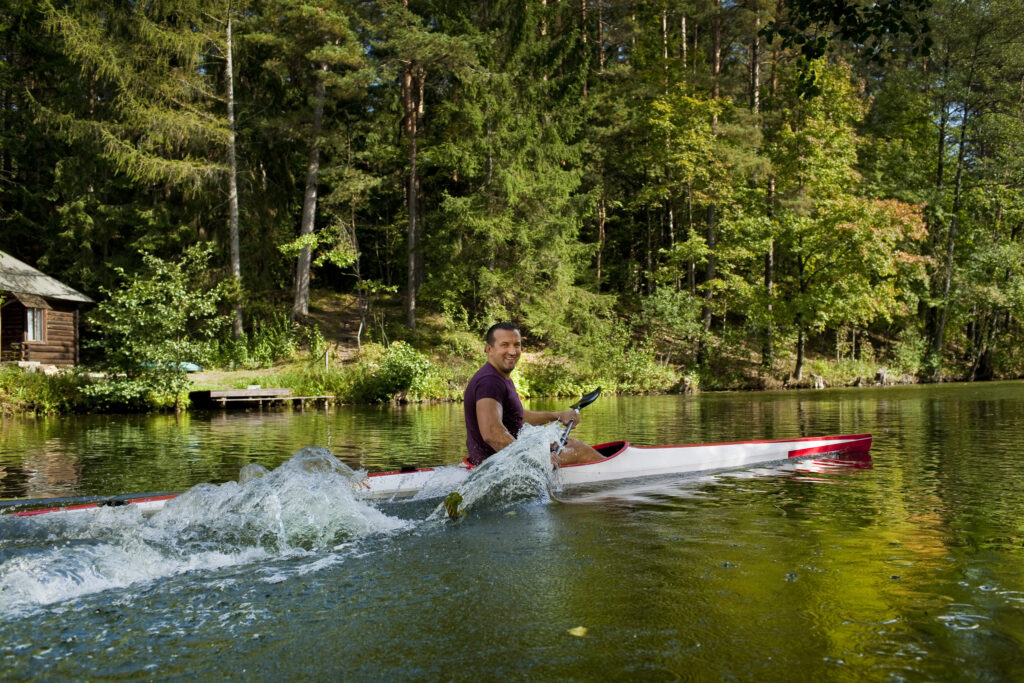
However, Augustów’s main attraction and most recognisable landmark is the magnificent feat of hydraulic engineering that is the Augustów Canal. It is well worth taking a trip by kayak, catamaran or one of the vessels operated by the Augustów Shipping Company and experiencing a lock passage at least once.
We particularly recommend a cruise along the Papal Trail, the route taken by Pope John Paul II in 1999 during his visit to the Augustów region. It leads to Studzieniczna, where, on a peninsula, you will find the Sanctuary of Our Lady of Studzieniczna. On the lakeshore, at the spot where the Pope disembarked from the Serwy, stands a monument. Beside the figure of Karol Wojtyła are his famous words: “I have been here many times, but as Pope for the first time and probably the last.”
On your way back from the cruise, it is worth visiting the Augustów Canal Museum, where you can learn, among other things, how the canal was constructed, what plans were drawn up for its construction and what tools were used.
After a day of active sightseeing, stop at one of Augustów’s restaurants serving what the town is best known for – fish. Caught in the local lakes and prepared in a variety of ways, they are a genuine delicacy and a delicious addition to your journey. And for dessert, there is no better choice than an Augustów blueberry bun from a bakery near the Market Square. In the evening, relaxing spa treatments are the perfect way to unwind.
Tales of Wigry
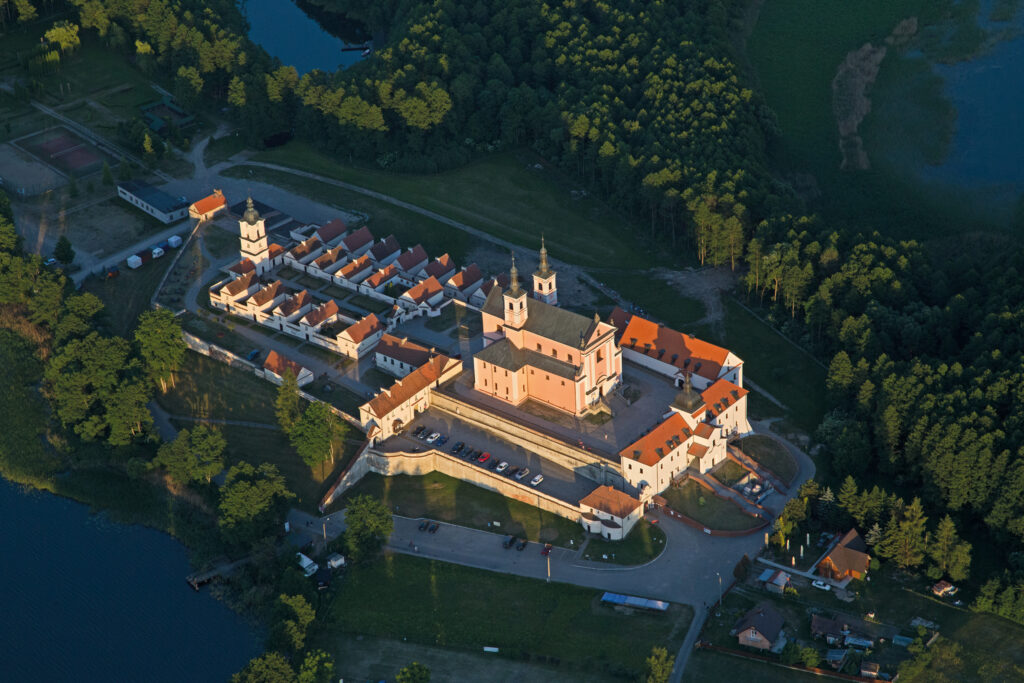
We leave Augustów and head north towards Lake Wigry. On a peninsula here stands a former Camaldolese monastery – one of the most valuable and beautiful historic monuments in the Suwałki region.
The complex comprises a church with crypts open to visitors, former monastic hermitages where you can spend the night, a gatekeeper’s cottage, a clock tower and gardens. At the foot of the monastery hill, you can rent water sports equipment at the marina or book a cruise on the lake. Hungry travellers are welcomed in the monastery refectory, which serves dishes inspired by papal, Camaldolese and regional cuisine, as well as healthy herbal teas.
Refreshed and re-energised, we set off to discover Wigry National Park. It is worth beginning your visit at the Museum of Wigry in Stary Folwark, which offers a genuine journey through time.
We begin at the pre-war hydrobiological station, whose building now houses the Museum, and visit the laboratory where Professor Alfred Lityński and his team once worked. We then travel back to earlier geological eras and the Ice Age, which shaped the present-day landscape of Wigry. We enter the interior of a glacier containing an authentic mammoth tusk and light a fire at a reindeer hunters’ camp.
Back in the warmer times of the present day, we travel to Płociczno-Tartak, where the Wigry Narrow-Gauge Railway begins its journey. However, the tempting aroma of an unfamiliar delicacy first draws us to the inn located right beside the station. The delicacy turns out to be freshly baked soczewiaki – dumplings filled with lentils and topped with crispy bacon and onions. Love at first bite…
A journey on the narrow-gauge railway is an extraordinary way to discover the natural richness of Wigry National Park. Along the route, the train stops at several stations where you can get off and admire the Wigry landscape.
Is It a Fairy Tale or Not? – In Search of the Dwarfs
From the Park, it is not far to Suwałki – the city of dwarfs and blues. This year’s Suwałki Blues Festival, held in early July, has already come to an end, so for now you will have to make do with a photograph on the bluesman’s bench.
If you would like to return for a moment to the carefree days of childhood, set out in search of the dwarfs. They can be found at some of the city’s most attractive tourist locations. To find them all, follow the “Dwarfs Are Everywhere” trail.
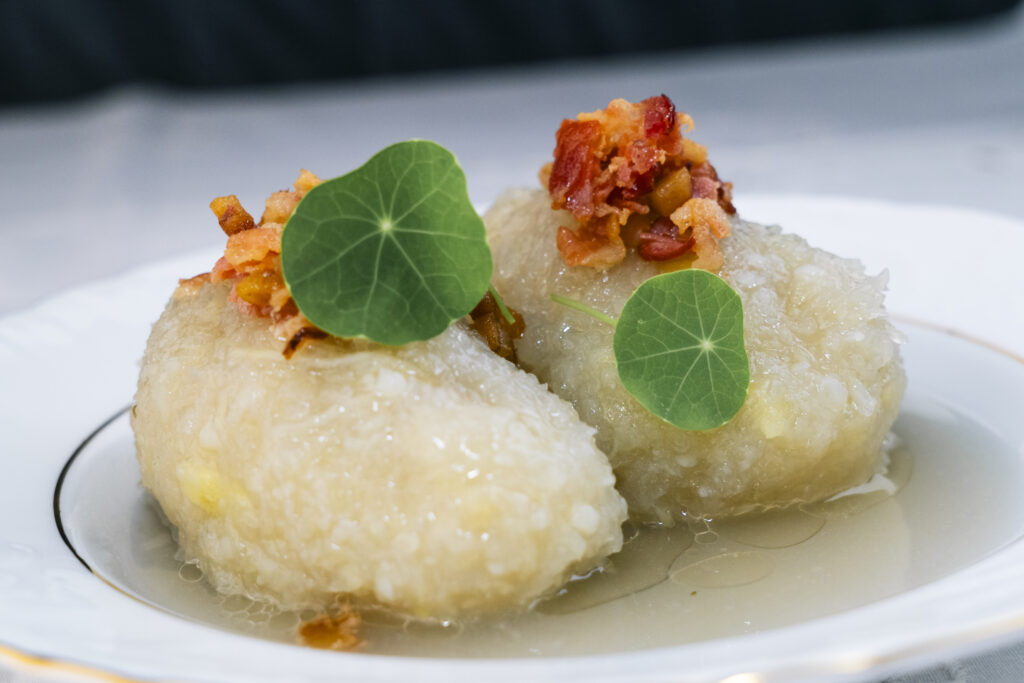
And if you are looking for an idea for a regional meal, the choice is enormous. Potato lovers will certainly enjoy kartacze, known here as cepeliny. This is a simple and filling dish and, most importantly, absolutely delicious.
Sękacz and mrowisko are culinary ambassadors of the northern part of the region, and we recommend taking these sweet treats home as delightful souvenirs of your visit. Perhaps they will inspire your loved ones to plan their own holiday in the beautiful Podlaskie Voivodeship?
Lords of the River Skies
We bid farewell to the fairy-tale landscapes of the Suwałki region. Travelling south-westwards, we reach the no less mysterious valleys of the Biebrza and Narew rivers.
For centuries, this vast, marshy area was not only a natural barrier to the migration of plants and animals, but also to human settlement. This explains the influences of different cultures, religions and culinary traditions that can still be observed today.
The unique ecosystem of the Biebrza is protected by Poland’s largest national park – Biebrza National Park. Its most valuable features include the broad river valley with Poland’s largest complex of peat bogs, known as the Biebrza Marshes.
Rare, endangered and disappearing species of plants, birds and other animals have survived here. The park’s symbol is a bird – the ruff – but it is the moose that is the undisputed ruler of the marshy meadows. It can most often be spotted along the so-called Tsar’s Road.
The road was built on the orders of Tsar Nicholas II at the end of the 19th century as a military route. Today, the term “Tsar’s Road” generally refers to the most interesting section of the route in terms of its natural and scenic value, where other animals and birds can also be observed.
At the Ławki Marshes, a spectacular panorama of seemingly endless open peatlands unfolds before you. This is one of the Park’s characteristic landscapes, showcasing its most valuable natural habitats. Some of Europe’s rarest bird species can be found here. You may even be lucky enough to spot an aquatic warbler, a greater spotted eagle or a great snipe…
It is a good idea to begin your visit to the Park at its headquarters in Osowiec-Twierdza. There you can obtain all the necessary information and maps and guidebooks, while some of the hiking trails and educational paths also begin there.
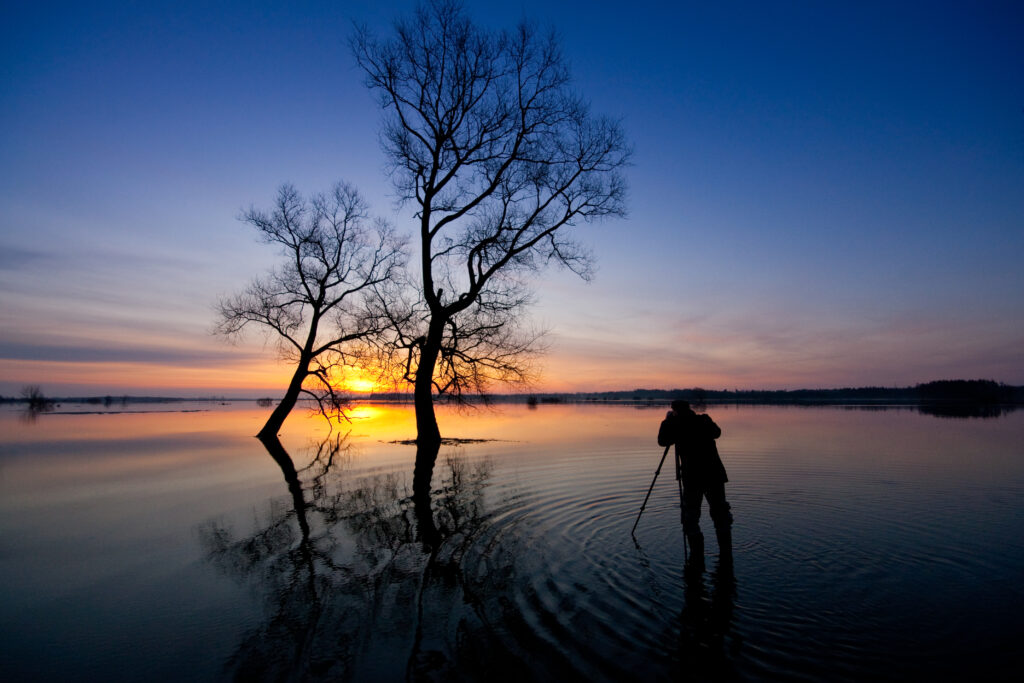
The best time to visit is early spring, during the bird migration season, when the entire Biebrza Valley comes alive with the joyful commotion and chirping of thousands of feathered visitors.
Nature enthusiasts seeking a closer encounter with the wild will certainly be tempted by more demanding excursions in search of moose or wolves. Or perhaps, while enjoying your holiday, you would like to lend nature a helping hand and take part in the Biebrza Haymaking Competition? This unusual event involves mowing the Biebrza meadows by hand with a scythe, helping to preserve the extraordinary biodiversity of the wetlands. Only this traditional method of mowing provides favourable conditions for rare species of plants and animals.
Białys at the King’s
Just beyond the southern boundary of Biebrza National Park lies the small but charming town of Tykocin. Known as the “Pearl of the Baroque”, it owes much of its splendour to Hetman Jan Klemens Branicki.
It was he who helped rebuild the town after an 18th-century fire and commissioned the magnificent Church of the Holy Trinity and the market square, where a monument to Stefan Czarniecki stands – one of only two monuments in Poland dedicated to a secular figure.
Tykocin is also renowned for its beautifully restored synagogue dating from 1642 – one of the oldest and best-preserved synagogues in Poland. Today, it is a branch of the Museum of Podlaskie in Białystok.
It is worth taking a stroll through Tykocin’s streets and looking for traces of the communities that once lived here. Visit the Talmudic House and the restaurants where you can discover the rich flavours of Jewish cuisine.
And, of course, do not forget the castle, where the story of Tykocin essentially began – but that is a story you will have to discover for yourselves…
Find out what białys is and how it came to be associated with the castle. Then, after the exertions of sightseeing, board the charmingly named water tram Malinka and relax while admiring the Narew’s natural beauty up close.
Soon, you will be heading out onto truly wide waters…
In the Labyrinth of Poland’s Amazon
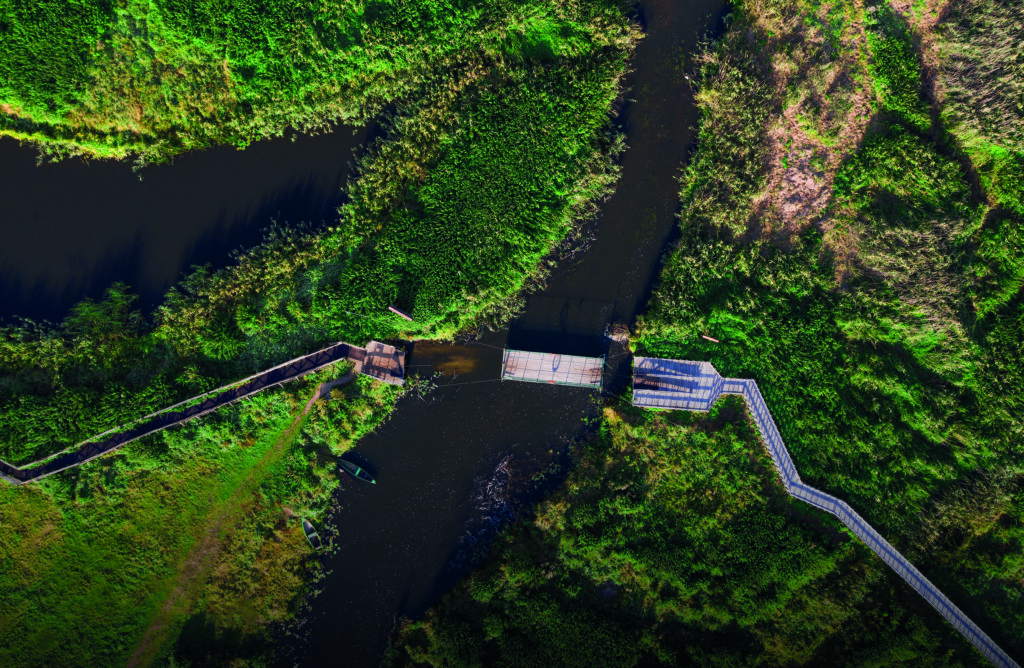
Although the Narew is much smaller than its South American sister, the Amazon, it is remarkably similar in character. It is an anastomosing river, meaning that it flows through numerous channels which repeatedly merge and then divide into many smaller ones.
Seen from above, it resembles a vast, irregular network stretched across an endless expanse of meadows, fields and forests. The marshes, peatlands and the river itself are home to an extraordinary diversity of plants and animals, particularly aquatic species.
All this natural wealth has been protected by Narew National Park since 1996. One of its greatest attractions is the Waniewo–Śliwno footbridge. This one-kilometre trail leads along a wooden walkway deep into the Park, providing excellent opportunities for observing wildlife.
A particularly interesting feature is the series of floating platforms, which allow visitors to cross the watery sections of the trail themselves. You will need a little strength in your arms to pull yourself along the ropes, but the fun is guaranteed!
And if you visit at the end of August, you can reward yourself for the effort at the annual Honey Feast, held at the headquarters of Narew National Park. It is an excellent opportunity to sample local delicacies and stock up on supplies for the autumn and winter evenings ahead.
A visit to the modern Młynarzówka Nature Education Centre is recommended not only for children. The first stop is a short film about the formation of the Narew Valley. The presentation “Morning on the Narew” reveals what fascinating sights can be seen along the river at dawn.
Children can enjoy specially prepared games and activities at kiosks equipped with three-dimensional photographs and virtual binoculars.
No visit to the Park would be complete without a trip in a pychówka – a traditional flat-bottomed boat once used on a daily basis by farms along the Narew, and today primarily serving tourists.
Łomża – A Gothic City of Artists
Remaining in the valley of the beautiful Narew, we reach the western edge of the region and the largest city in this part of the Podlaskie Voivodeship – Łomża.
Architecture enthusiasts will be pleased to learn that this is the only city in the region where buildings of Gothic origin can still be found. The best example is the 15th-century Cathedral of St Michael the Archangel.
It is worth taking a stroll around the Old Market Square, where one particular bench has a special story: Hanka Bielicka is seated there. Famous for her love of hats, the actress and cabaret artist spent her youth in Łomża. After the First World War, she completed her secondary education here, and after the Second World War she remained connected with the region for some time through the Dramatic Theatre in Białystok.
Take a moment to relax in the company of this remarkable figure of the Polish performing arts.
Łomża is also home to the thriving Puppet and Actor Theatre, which, among other events, organises the WALIZKA International Theatre Festival – a unique showcase and meeting point for some of the most interesting developments in contemporary theatre of form.
To visit Łomża without tasting its fish delicacies would be to miss out on an essential part of the city. Smoked, fried or preserved in jars to take home – you will find all these specialities in one place, which the hospitable people of Łomża will be happy to point you towards.

This is where we conclude our journey through the Podlaskie Voivodeship. There are still so many places we would love to invite you to discover, so we hope there will be an opportunity for a second part of our journey together.
Come, see for yourselves, taste and experience the luxury that comes as standard here…
Anna Androsiuk