
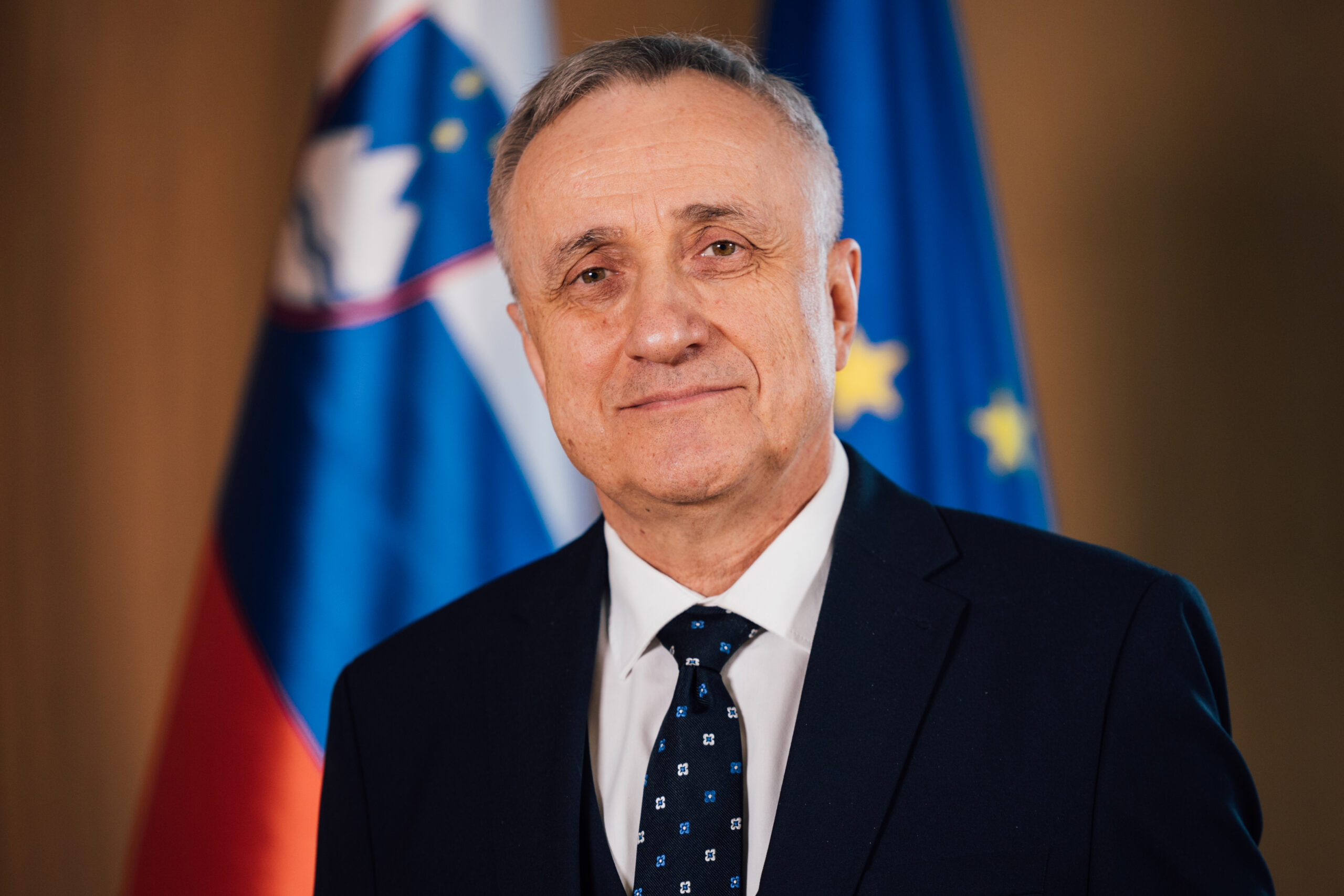
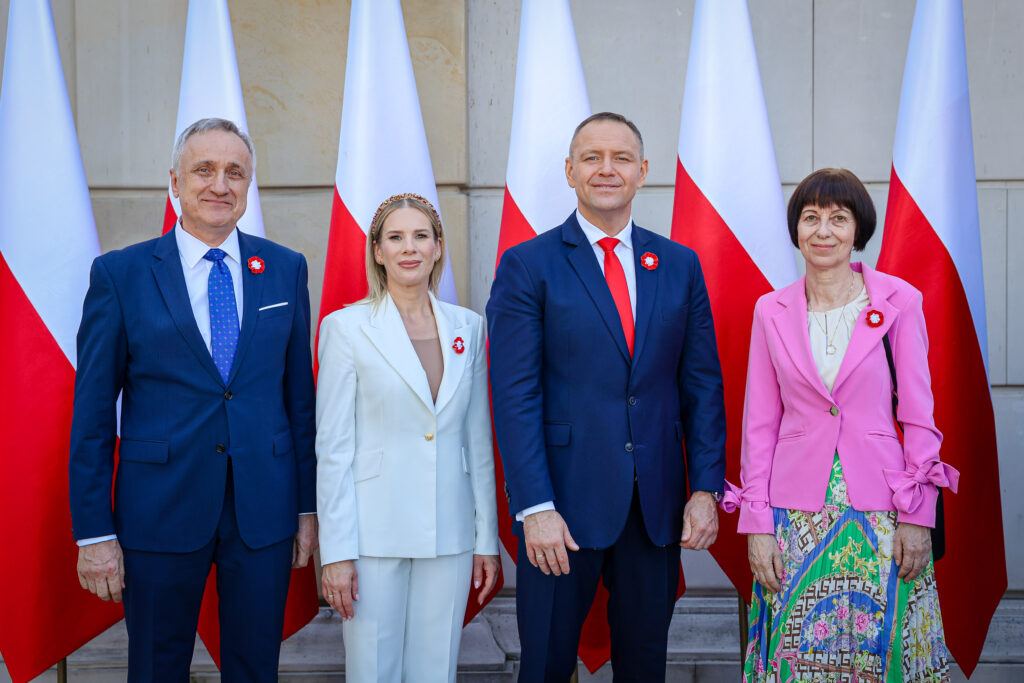
We spoke with Slovenian Ambassador Bojan Pograjc before he concludes his four-year term in Poland at the end of July. He was keen to quote the current Minister of Foreign Affairs, Radosław Sikorski, who said that all nations in the world are great, regardless of their geographical size. He also drew particular attention to the good and friendly relations between Slovenia and Poland – partners in the European Union and NATO allies – which resulted in trade between the two countries doubling between 2020 and 2025. This notable achievement warrants consideration of a strategic cooperation agreement between the two countries.
Mr Pograjc, you came to Warsaw in 2022 as the new Slovenian ambassador. What did you know about Poland before you arrived?
Slovenia and Poland connect southern and northern Central Europe, and the Adriatic and Baltic Seas, or, to put it another way, the Port of Koper and the port city of Gdańsk. A look back in history reveals that Anne of Celje, who spent her early years at the court in Celje, which is now situated in Slovenia, was crowned Queen Consort of Poland in 1403 as the wife of Władysław II Jagiełło, King of Poland and Grand Duke of Lithuania.
Before we Slovenians got our first university in Ljubljana in 1919, Slovenian students had for centuries been honing their minds at the Jagiellonian University in Krakow. In 1683, we celebrated a historic victory together that halted the advance of the Ottoman Empire and Islam into Europe in the famous Battle of Vienna. The Polish king at the time, John III Sobieski, defeated the Turkish army. We must also recall the ‘Miracle on the Vistula’, a pivotal battle in world history that was led by Marshal Józef Piłsudski. His victory in 1920 saved Europe from communism.
Then the light of the world shone forth with the pontificate of Saint Pope John Paul II from Poland, who played a central role in global events by sparking a revolution of conscience. His efforts contributed to the emergence of the ‘Solidarność’ movement, which sent a clear message that communism could not last forever. This is also why we Slovenians were able to gain independence and were invited, together with the Poles, to join NATO in 2004. That same year, we became part of the ‘Western civilisation club’ and intertwined our destinies within the European Union.
Have you larned Polish?
Regardless of where you are from, serving as an ambassador in Warsaw is a privilege that requires cultural awareness. And cultural awareness begins with communicating in the host country’s official language. Although Slovene and Polish are both Slavic languages, knowing one does not necessarily make it easier to learn the other. There is a great deal of positive and also negative interference in terms of the meaning and pronunciation of words and grammar. My private Polish teacher was making a great effort, given my ‘youth’ — I’m in my early sixties. “Dobrze rozumiem język polski, ale mam pewne ograniczenia jeśli chodzi o mówienie, a zwłaszcza pisanie.” (I understand Polish well, but have some limitations when speaking, and especially when writing.)
Who is your favourite Polish writer, poet, painter or musician?
My conservative worldview stems from my upbringing and a combination of a military and a diplomatic career, and I do not try to conceal it. Consequently, I favour thoughtful, gradual changes. Culture, in the narrower sense, has never been an exception. To gain a visual overview of Polish history, I recommend viewing the historical, political and military scenes depicted by the painter Jan Matejko. My youth was shaped by the Nobel Prize-winning Polish author Henryk Sienkiewicz, writing under the pen name Litwos, and by his novels The Knights of the Cross and With Fire and Sword.
When selected poems by the Polish Nobel laureate and existential poet Wisława Szymborska, titled Radost pisanja (The Joy of Writing), appeared in Slovene in 2019, they immediately became close to my heart. In fact, I can recite some of them by heart in my mother tongue: “Primerilo se je življenje / to je nekaj zelo pomembnega // toda minuta je del večnosti” (“Life happened / It is something very important // But a minute is a part of eternity.”). Poland has produced many outstanding composers and musicians across a variety of genres. I regularly attend concerts featuring Chopin’s works. At home, however, I enjoy listening to contemporary Polish pop singers and bands, as well as to Zbigniew Wodecki.
You are a staunch European. Europe is currently facing numerous challenges, from security issues to the energy transition. What part could Poland and Slovenia play in developing a joint response to these issues?
Of all the human needs, I prioritise security. What use are good health and an abundance of energy if we can be killed by an enemy drone? Despite their differences in size and geopolitical location, Poland and Slovenia are important EU allies, complementing each other’s roles in addressing key European challenges in areas such as security, enlargement, green transition and strengthening of the single market. Due to its geostrategic location, Poland acts as a key bulwark of NATO’s and the EU’s eastern flank. It is one of Ukraine’s leading supporters and is playing a key role in shaping European defence policy and protecting external borders against hybrid threats.
In this context, I would like to highlight the significant visit to Kyiv on 15 March 2022 by the prime ministers of Poland, the Czech Republic and Slovenia, less than a month after the start of Russia’s aggression against Ukraine. On that trip, I personally accompanied the then and current Slovenian Prime Minister, Janez Janša. The visit was about more than just showing solidarity with the Ukrainian people; it demonstrated to the representatives of EU institutions how they should act and where they should focus their attention in future. And above all, that we would have to take risks and mobilise resources in a spirit of solidarity because the war for Ukraine is also a war for Europe.
Slovenia is helping to ensure stability in the Western Balkans. Through its diplomatic efforts and development projects, my country is actively supporting the region’s enlargement process and security integration. Meanwhile, Poland is transforming its energy mix by shifting from coal to nuclear power and renewable sources, thereby reducing its dependence on Russian energy resources and laying the foundations for the EU’s long-term energy sovereignty.
Slovenia focuses on decentralised energy solutions and sustainable resource management, and is a key proponent of the circular economy. The country actively supports green infrastructure initiatives, digitalisation and the implementation of the European Green Deal. It is worth noting that Slovenia built its first nuclear power plant forty-three years ago in collaboration with the American company Westinghouse.
Slovenia is renowned for its modern economy, a robust industrial sector and innovative businesses. Which areas of economic cooperation between Poland and Slovenia do you think have the most untapped potential?Although economic cooperation between Poland and Slovenia has grown rapidly in recent years, particularly in the pharmaceutical sector, there is still untapped potential due to the complementary nature of the two economies and a lack of ambition to enter third markets together. This potential is evident in areas such as logistics, green energy, digital technologies, industrial supply chains and R&D. Through more active collaboration between businesses, universities and public institutions, the two countries could significantly boost trade, investment and technological cooperation, thereby strengthening their competitiveness within the European Union.
Poland is one of the largest logistics hubs in Central Europe, while the Port of Koper in Slovenia serves as an important gateway to the Mediterranean. Integrating Polish distribution centres more closely with the Port of Koper could enhance the flow of goods between the Baltic and Adriatic Seas, thereby reducing transport costs across the Three Seas Initiative region.
Modern diplomacy increasingly relies on projecting a nation’s image through culture, science and people-to-people ties. Which aspects of Slovenian culture and identity have you wanted to bring closer to the Polish public during your time in office?
Slovenian culture and identity have evolved at the intersection of Slavic, Germanic, Romance and Finno-Ugric influences, resulting in a distinctive fusion of traditions, languages and geography. At the heart of Slovenian national identity lies the Slovene language, with its unique dual form and a rich tapestry of over 40 dialects. Slovenia’s greatest poet, France Prešeren – a contemporary of Adam Mickiewicz – wrote what later became the Slovenian national anthem, Zdravljica, a poem which remains a powerful celebration of peace and mutual respect among nations to this day.
We Slovenians are particularly proud of the Carniolan honeybee, which symbolises diligence and the tradition of beekeeping. This is why Slovenia spearheaded the initiative that led to the UN’s declaration of World Bee Day. Slovenian traditions and cuisine have also played an important role, including festive leavened pastries with various fillings, such as ‘potica’, as well as ‘Kranjska klobasa’ – a meat product with a long tradition and a protected geographical indication in the EU – and the ‘kozolec’, the hayrack, a wooden structure for drying hay that is an architectural feature of the Slovenian countryside.
And last but not least, there are the extraordinary Slovenian personalities, from General Rudolf Maister, who also served in Poland, to architect Jože Plečnik, who shaped the appearance of Ljubljana, Prague and Vienna, and Slavko Avsenik, a folk music pioneer who achieved worldwide fame with the Slovenian polka. I will stop here and not list all the phenomenal Slovenian athletes. With their outstanding achievements in cycling, ski jumping, sport climbing, volleyball, handball and basketball, they are just as well-known in Poland as they are in their homeland.
With its Alpine region, Adriatic coast and rich cultural heritage, Slovenia is one of the most picturesque countries in Europe. What do you think encourages Polish people to explore Slovenia as a travel destination?
Situated at the meeting point of the Alps, the Mediterranean, the Pannonian Plain and the Balkans, Slovenia is one of the most diverse countries in Europe. Despite its modest size, it boasts a rich cultural heritage and stunning natural beauty. Thanks to its diversity, the hospitality of its inhabitants and the preservation of its natural environment, it is a popular destination for Polish visitors.
The flow of tourists between the two countries is growing, with Polish tourists most often visiting the Slovenian coast, the Alps and the country’s thermal spas. If not for a longer holiday, then at least for a short stop when driving to Italy, Croatia or Greece. Slovenia offers a wide range of attractions, including active and gastronomic tourism or hiking in the pristine surroundings of Triglav National Park, home to the picturesque lakes Bled and Bohinj. Visitors can also explore the Postojna Cave system, relax in spas, ride Lipizzaner horses at the Lipica Stud Farm, and enjoy a stay in the charming coastal town of Piran. The direct daily air service between Warsaw and Ljubljana, provided by the Polish airline LOT and taking only an hour and a half, is a comfortable option for modern ‘weekend tourists’.
Slovenia is renowned for its rich culture, literature and natural attractions. Which cultural initiatives have been particularly effective in presenting Slovenia to the Polish people?
Slovenian cultural initiatives in Poland primarily focus on promoting literature, language, film and contemporary art, as well as fostering connections between Slovenian and Polish creative professionals. Slovene language programmes are offered at universities in Gdańsk, Katowice, Kraków, Łódź and Warsaw. As well as language courses, these programmes include numerous cultural events such as film screenings, Slovenian culture festivals, visits by Slovenian writers, translation workshops, presentations of Slovenian music and study trips to Slovenia.
Slovenian films are regularly screened at Polish film festivals and cultural weeks. Furthermore, Slovenian artists participate in contemporary art exhibitions and transnational projects involving cultural institutions in both countries. This type of collaboration is often supported through European Cooperation Projects. Slovenian musicians perform at Polish festivals of modern, jazz, classical and alternative music. International networks and festivals in the Central European region also play an important role, bringing together Slovenian and Polish performers.
During your term in office, you had the opportunity to get to know Poland better. Is there a particular place, event or experience that has left a lasting impression?
I will never forget my telephone conversations with my colleague in Ljubljana, Dr Krzysztof Olendzki, which demonstrated the highest degree of solidarity when the Polish state and Church provided assistance to Slovenia during the catastrophic floods of 2023. I will always remember the beatification ceremony of the Ulma family on 10 September 2023 in Markowa. The entire Polish family, including a child still in the mother’s womb at the time of her death, were murdered in 1944 for sheltering eight Jews in their home.
Nor will I forget the Chopin concerts in the Łazienki Królewskie Park. These concerts are among Warsaw’s most distinctive summer experiences, combining music, nature and a unique historical atmosphere.
BIOGRAPHY
Ambassador Bojan Pograjc (born 1961) holds a university degree in Political Science (Defence Studies) from the Faculty of Social Sciences at the University of Ljubljana and a Master of Science degree in National Security Strategy from the National War College of the National Defence University in the United States. He has also completed the Generals, Flag Officers and Ambassadors’ Course at the NATO Defence College.
He began his lengthy military career as a reserve officer in the Slovenian Territorial Defence Force. After a brief stint at the Logistics Directorate of the Ministry of Defence, he performed command and staff duties at all levels of the Slovenian Armed Forces. In 2000, he became State Secretary at the Ministry of Defence, responsible for NATO, defence logistics and the SAF. In 2012, he was appointed Deputy Commander of the NATO-led Kosovo Force, serving for 13 months.
He was promoted to the rank of Brigadier General in 2006 and performed duties in the acting rank of Major General from 2009 to 2020.
Between 2020 and 2022, he served as State Secretary for Military, Defence and Foreign Affairs in the Cabinet of the Prime Minister of the Republic of Slovenia. On 23 May 2022, the President of the Republic appointed him as Extraordinary and Plenipotentiary Ambassador of the Republic of Slovenia to the Republic of Poland.